
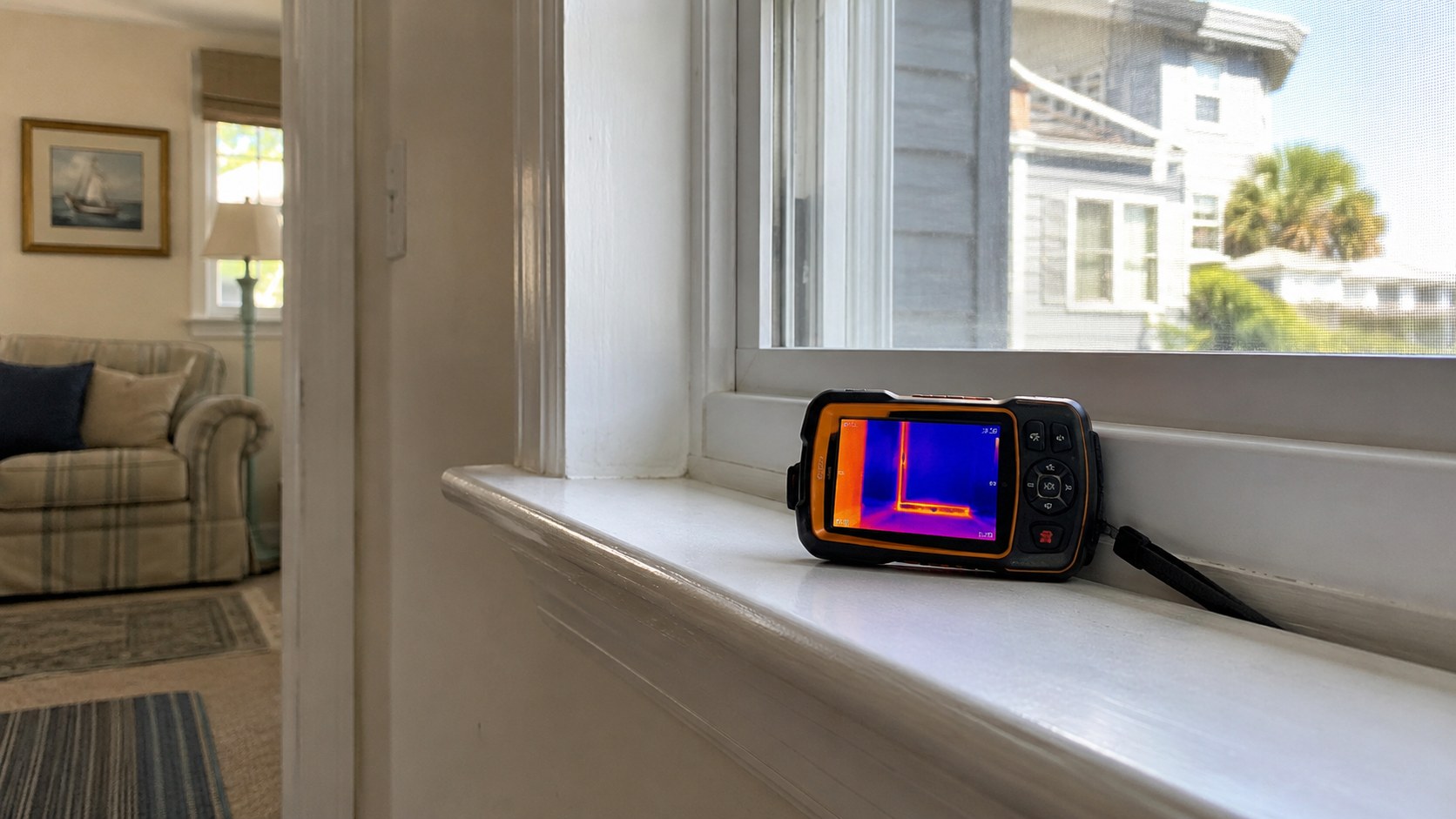
What Thermal Imaging Finds
Infrared thermography detects differences in surface temperature that indicate underlying problems. These issues are completely invisible to the naked eye and to a standard visual inspection — but they show up clearly on our FLIR camera.
💧 Hidden Moisture & Leaks
Water behind walls, under floors, or above ceilings shows as cold spots on thermal imaging — often before visible water damage or mold appears.
❄️ Missing Insulation
Thermal gaps in walls and ceilings are plain as day in infrared — find out exactly where your heating and cooling dollars are escaping.
⚡ Electrical Hot-Spots
Overloaded circuits, failing breakers, and loose connections generate heat — our camera finds them before they become fire hazards.
🌡️ HVAC Inefficiency
Leaking ductwork, poor duct connections, and HVAC equipment failures all show thermal signatures that point to comfort and efficiency problems.
Why It's Included — Not an Add-On
Many inspectors charge $100–$250 extra for thermal imaging. We include it in every inspection because we believe it's a fundamental tool, not a premium upgrade. A home inspection without thermal imaging is an incomplete home inspection.
Our FLIR E86 camera captures professional-grade infrared imagery at a resolution that clearly distinguishes temperature differences across wall, ceiling, and floor surfaces. Every thermal finding is documented in your report with both a visible-light and infrared photo side-by-side so you can see exactly where and what the issue is.